OpenAI’s Claude Code: Understanding Codex and codex-mini
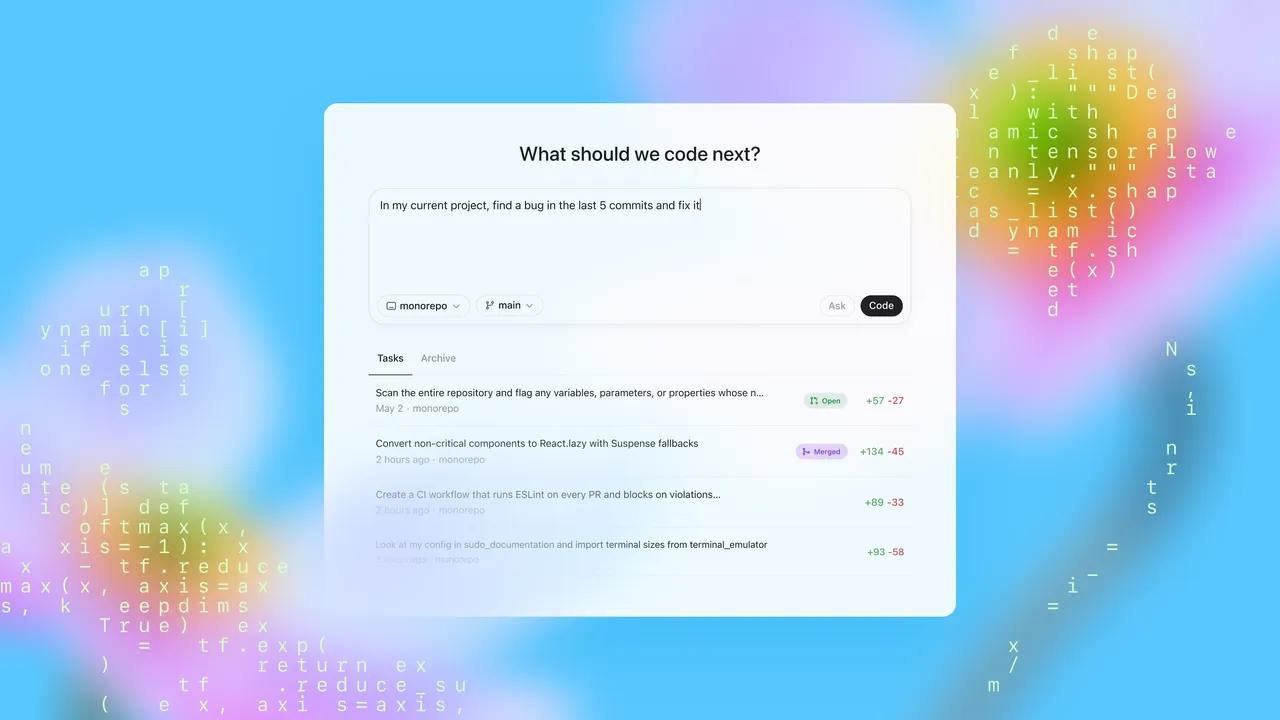
Claude Code offers features similar to OpenAI’s Codex, allowing users to leverage AI agents for coding within a terminal environment. Recently, OpenAI has expanded its ecosystem by releasing codex-mini, a model specialized for coding tasks. This article explores the core features and characteristics of Codex and codex-mini, their relationship with Claude Code, and their potential applications in development environments.
Codex: A New Frontier in AI Coding
Codex is an AI model developed by OpenAI that understands natural language commands and can generate, modify, or complete code. It helps developers automate the initial stages of code writing and handle complex tasks more efficiently. Supporting multiple programming languages, Codex contributes to improving both the quality and efficiency of code.
Key features of Codex include:
-
Natural Language Understanding: It interprets user instructions in natural language to generate code, making it accessible even to beginner coders.
-
Code Generation: It writes code to perform specific functions or generates new code based on existing code.
-
Code Modification and Completion: It fixes bugs in code or completes incomplete code snippets.
-
Support for Multiple Languages: It supports various programming languages like Python, JavaScript, and Java, making it suitable for a wide range of development environments.
-
API Compatibility: It works with other platforms that follow the OpenAI API format (e.g., OpenRouter, Gemini, Azure).
These features help developers reduce coding time and focus more on creative tasks.
codex-mini: A Specialized Coding Model
To further improve Codex’s performance, OpenAI has released codex-mini, a model trained specifically for coding tasks. It delivers superior performance in generating, modifying, and completing code, making it especially useful for tasks tailored to specific programming languages or domains.
Advantages of codex-mini include:
-
Higher Accuracy: Provides more accurate results in code generation and modification tasks.
-
Improved Efficiency: Reduces time spent coding and boosts developer productivity.
-
Specialized Features: Offers functions optimized for specific programming languages or development environments.
When used together with Codex, codex-mini enhances the efficiency and accuracy of AI-powered coding tasks.
Claude Code vs Codex: Similarities and Differences
Like Codex, Claude Code supports coding via AI agents in a terminal environment. Both tools understand natural language commands to generate and modify code. Claude Code may have initially been built on Codex, but it might now use different models or its own proprietary technology.
The key differences between the two are:
-
Model: Claude Code can use various models, while Codex primarily uses OpenAI models.
-
Platform Support: Codex is available across platforms that support the OpenAI API, while Claude Code may be optimized for specific environments.
-
Features: While both offer similar capabilities, each may include differentiated features tailored to their platforms.
-
User Interface: Claude Code is likely optimized for terminal use, while Codex can be used through various interfaces via API.
Applications in Development Environments
Codex and codex-mini can be applied in a variety of ways in development workflows:
-
Code Autocompletion: Enhances IDE autocompletion to speed up coding and reduce errors.
-
Code Generation: Automatically creates code for specific functions, accelerating development speed.
-
Code Review: Reviews the quality of code and suggests improvements.
-
Debugging Assistance: Identifies bugs and proposes solutions automatically.
-
Documentation Generation: Automatically generates code comments, API documentation, or user manuals.
These features help developers save time on coding tasks and carry out projects more efficiently.